Turbochargers 101: How They Work, Why They Fail, and What Shops Should Know
Turbochargers 101: How They Work, Why They Fail, and What Shops Should Know
Turbochargers have become a common way for vehicle manufacturers to increase power and efficiency without relying on a larger engine. For repair shops, that creates growing demand for accurate diagnosis, dependable replacement parts, and installation practices that protect the new unit.
A successful turbo replacement is not only about choosing a unit that fits. It also requires understanding why the original turbo failed, protecting lubrication and airflow, and making sure the supporting components are ready for service.
KEY TAKEAWAY
A turbocharger can deliver strong performance and efficiency, but the replacement is only as reliable as the diagnosis and installation around it. Confirm the root cause, protect oil flow, address related components, and select a properly matched replacement.
What Turbochargers Do | What a Quality Repair Requires |
Use exhaust energy to compress intake air Increase engine power and torque Can support fuel efficiency and efficient combustion Help smaller engines produce stronger output | Correct application and fitment Clean, unrestricted oil supply and return Inspection of related intake and exhaust systems Replacement of damaged or contaminated supporting components |
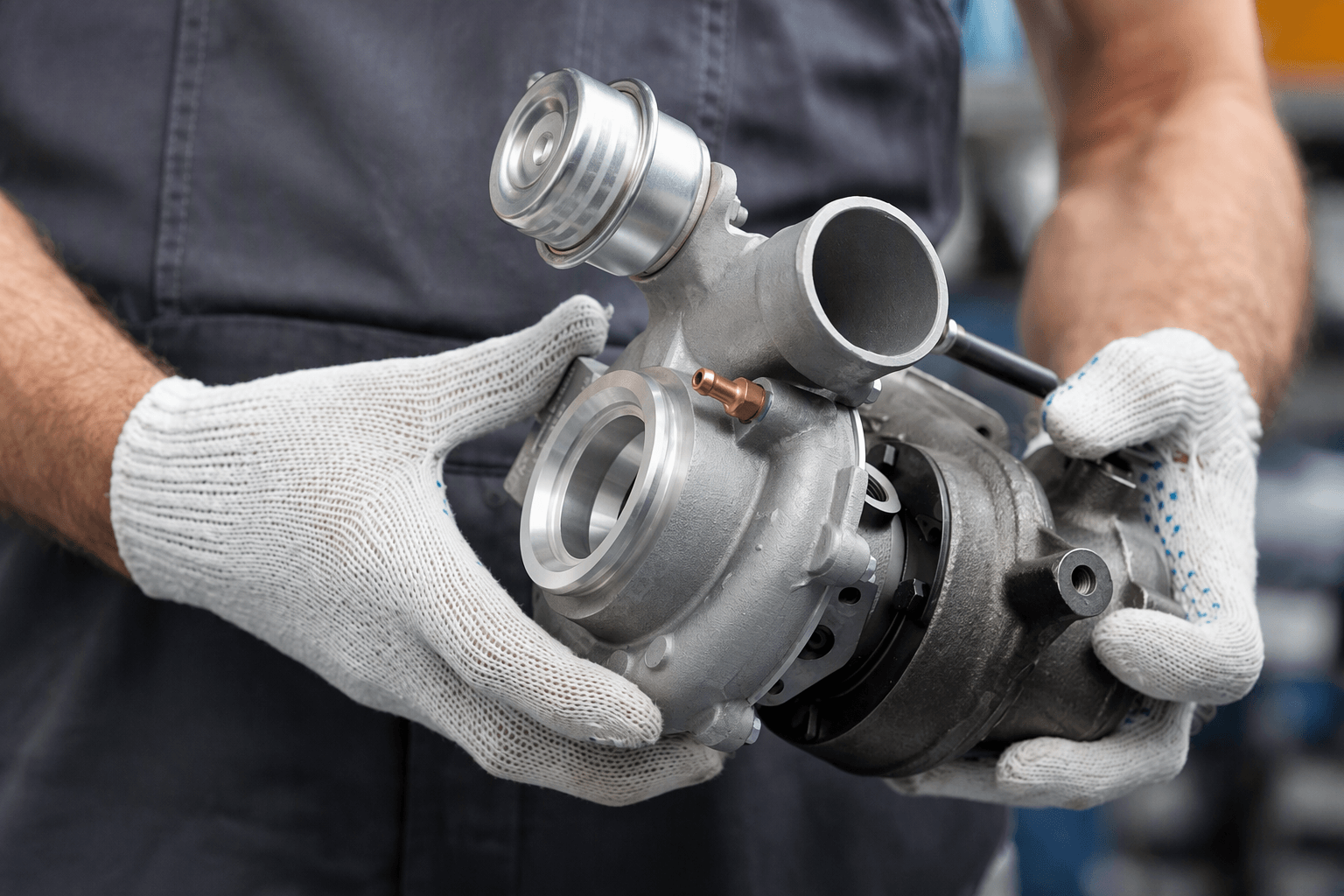
A turbocharger uses energy from the engine’s exhaust gases to spin a turbine. That turbine is connected by a shaft to a compressor wheel, which pushes more air into the engine. With more air available for combustion, the engine can produce more power than a similarly sized naturally aspirated engine. In simple terms, a turbocharger recovers exhaust energy that would otherwise leave through the exhaust system and uses it to help the engine breathe more effectively. The exhaust side and intake side work together at very high speed:
Exhaust gas flows through the turbine housing and spins the turbine wheel.
The connected shaft turns the compressor wheel on the intake side.
The compressor draws in and compresses outside air.
The pressurized air moves toward the engine, where it supports increased power and torque.
Because the rotating assembly operates at high speed and temperature, clean oil, proper lubrication, unrestricted airflow, and correct installation are critical. Turbocharging can provide several vehicle-level advantages when the engine and supporting systems are operating as designed:
Enhanced engine power and torque
Improved fuel efficiency in appropriate operating conditions
More efficient combustion that can support reduced emissions
Better performance at higher elevations, where naturally aspirated engines have less air available
A failed turbocharger is often the visible result of another problem. Replacing the turbo without correcting the root cause can damage the replacement and create a repeat repair. Oil contamination: Debris or degraded oil can damage the bearings and precision surfaces inside the turbocharger. Lack of lubrication: Restricted oil flow, low oil pressure, delayed oil delivery, or an installation issue can prevent the rotating assembly from receiving the protection it needs.
Oil leakage: Leaks may be related to seals, oil drain restrictions, crankcase pressure, or surrounding engine conditions. The source should be diagnosed before the new unit is installed.
Foreign-object damage: Debris entering through the intake or exhaust side can strike and damage the compressor or turbine wheel.
Over speeding: Conditions that force the turbo beyond its intended operating range can place excessive stress on the rotating assembly.
Turbocharger damage can be a symptom rather than the original problem. Before completing the repair, the shop should evaluate the systems that support the turbo, including oil supply and return, intake plumbing, charge-air components, exhaust flow, and engine operating conditions.
The goal is not simply to install a new turbo. The goal is to correct the condition that damaged the original unit and give the replacement the best chance of a long service life.
Oil lines may sometimes be cleaned, but replacement is often the safer choice when a new line is available, especially if contamination, restriction, heat damage, or deterioration is suspected. A compromised oil feed or drain line can undermine an otherwise correct turbo installation. Shops should follow the vehicle and component manufacturer’s service information for the specific application. When replacement oil lines are available, including them in the repair decision can reduce installation risk and help protect the new turbocharger.
A complete replacement solution should make installation more straightforward and reduce the chance that a technician must stop the job to locate basic hardware or sealing components. Depending on the application and supplier, the package may include:
Application-specific gaskets and installation hardware
Lubrication or priming support for initial startup
Protective installation supplies
Access to related components, such as oil lines, when available
***Package contents vary, so the shop should confirm exactly what is included before beginning the repair.***
Turbochargers are application-specific components. Housing orientation, mounting points, oil and coolant connections, actuator setup, and included hardware all affect whether the unit installs and operates correctly.
A replacement described as an OE-equivalent fit should still be verified against the vehicle application and installation requirements. Product checks such as pressure testing and high-speed balancing can provide additional confidence, but they do not replace correct diagnosis and installation.
A parts specialist can evaluate more than a brand name. By reviewing application history, fit concerns, sales patterns, and warranty or return activity at the part level and vehicle-application level, the supplier can make more informed sourcing and catalog decisions.
That approach can help identify parts that consistently support strong repair outcomes and limit exposure to applications with recurring fit or failure concerns. The objective is simple: provide the right part for the vehicle while helping the shop protect technician time, cycle time, reputation, and profitability.
The purchase price is only one part of the repair. A shop should consider the complete outcome:
Is the replacement correctly matched to the vehicle?
Has the cause of the original failure been identified?
Are the oil feed and drain paths clean and unrestricted?
Have related intake, exhaust, and charge-air components been inspected?
Are the needed gaskets, hardware, and supporting parts available?
Does the supplier provide practical warranty support and reliable availability?
A lower-priced unit that creates added labor or a comeback is not a value. A properly matched replacement, supported by good diagnostics and complete installation planning, is more likely to deliver the repair outcome the shop and vehicle owner expect.
Turbochargers can improve power, torque, efficiency, and high-altitude performance, but they depend on clean lubrication, controlled airflow, correct operating conditions, and exact application fit. When a failure occurs, replacing the unit without addressing the surrounding cause can put the new turbo at risk.
The smartest repair combines a properly matched turbocharger with root-cause diagnosis, careful installation, and the supporting components needed to protect the replacement. That is how a shop reduces avoidable comebacks and delivers stronger total repair value.
THE RIGHT PART. DELIVERED RIGHT. Complete repair value starts with the right application, the right diagnosis, and the right installation support.
This article was developed from 1-800 Radiator & A/C internal turbocharger training materials. Application requirements, package contents, warranties, and service procedures may vary. Always confirm the current catalog, warranty terms, and manufacturer service information for the specific vehicl